
How do I license my invention?
Licence know-how or a patent
Before licensing your invention, you need to decide whether to conclude:
- a know-how licence; or
- a patent licence.
If your invention is secret and you haven’t filed any patents, you could conclude a know-how licence. However, the value of your know-how will fall when your invention is no longer secret … likely, when the licensee makes the first sale.
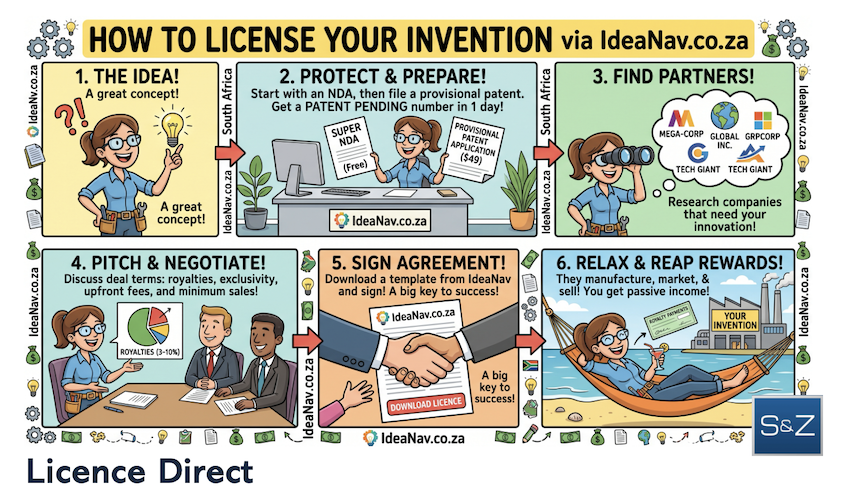
Instead of licensing know-how, it is better to file a provisional patent (this can be done for only $49) and conclude a patent licence. Alternatively, the licensee may require you to file and license a complete patent (which includes a set of claims).
Tip: Consider creating a “brand”; filing a trademark for the brand; forcing the licensee to use the brand; and also licensing the trademark. This will preserve some rights if the patent is later found to be invalid / the know-how is no longer secret.
How to negotiate and draft a licence
Licence negotiation takes a long time and finalising the agreement is an iterative process. If you engage a lawyer, licensing is expensive. Fortunately, you can negotiate and draft a licence yourself. Templates are not a good idea, as they’re seldom suited for your specific situation. Rather use Licence Direct. Licence Direct structures your negotiation – ensuring that you cover all relevant issues – and generates a licence based on Questionnaire inputs.
Licence Direct covers:
- patent licences;
- know-how licences;
- trademark licences;
- copyright licences; and
- any combination of the above.
It’s the simplest way to conclude a licence. And, it’s free.